
Catch the Full Episode:
 Overview
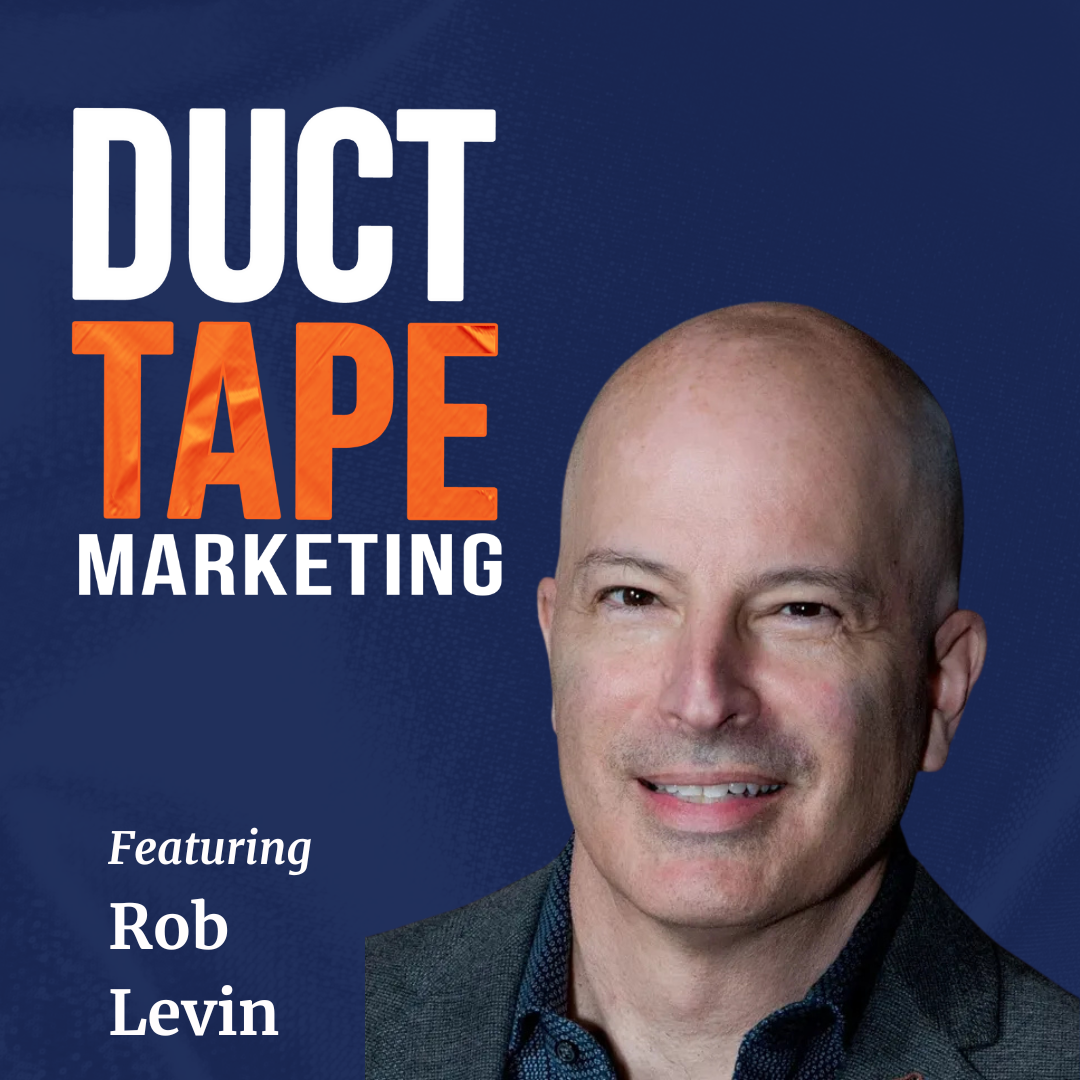
In this episode of the Duct Tape Marketing Podcast, John Jantsch interviews Rob Levin, serial
entrepreneur, chairman and co-founder of Work Better Now, and author of
The New Talent Playbook: The Ultimate Guide for Building Your Dream Team.
With over 30 years of experience helping small and mid-sized businesses solve persistent
talent challenges, Rob shares why the traditional hiring “playbook” no longer works. He
explains how the pandemic, generational shifts, remote work, and artificial intelligence
have fundamentally changed the talent landscape.
The conversation explores the hidden talent crisis facing SMBs, why culture is more critical
than ever, how to rethink KPIs in a remote-first world, and what it really means to become
an AI-first organization. If you’re still managing talent like it’s 2016, this episode offers
a roadmap for building a future-ready team.
Guest Bio: Rob Levin
Rob Levin is a serial entrepreneur and business growth expert with more than three decades
of experience helping small and mid-sized businesses thrive. He is the chairman and co-founder
of Work Better Now, a company that empowers U.S.-based SMBs to access highly skilled remote
professionals, particularly from Latin America, to overcome hiring bottlenecks and build
high-performing teams.
Rob is the author of The New Talent Playbook: The Ultimate Guide for Building Your Dream Team,
where he outlines a modern approach to talent strategy in an era defined by remote work,
rapid technological change, and AI disruption.
Key Takeaways
1. The Talent Crisis Is Really a Talent Shift
Despite headlines about layoffs, many small and mid-sized businesses still struggle to fill
critical roles. The skills needed to succeed in large enterprises often do not translate to
the owner-minded, adaptable talent required in SMBs.
2. The Old Hiring Playbook Is Obsolete
Many business owners are still operating as if it’s 2016. Power dynamics have shifted, top
performers have more leverage, and younger generations prioritize culture and meaning at work
more than previous generations.
3. Culture Is a Strategic Advantage
A clearly defined set of core values is the foundation of a strong culture—especially in remote
and hybrid environments. Companies should hire and fire based on core values and intentionally
build a culture that embraces change.
4. Remote Teams Require Structure and Over-Communication
In a remote environment, clarity and communication must be intentional. Weekly meetings,
consistent updates, and well-defined KPIs are essential to maintaining alignment and accountability.
5. KPIs Benefit Employees as Much as Employers
Well-designed KPIs are not just management tools—they give employees clarity on expectations and
what it means to “win” in their role. A lack of KPIs often signals unclear leadership rather than
poor employee performance.
6. Upskilling Is a Competitive Imperative
As technology and AI reshape roles, companies must identify the new capabilities they need and
aggressively invest in training. Affordable and high-quality education is widely available, and
businesses should leverage it.
7. Business Owners Must Lead the AI Shift
Before expecting teams to use AI effectively, business owners must gain hands-on experience
themselves. Understanding AI’s capabilities firsthand enables leaders to redesign workflows,
not just automate existing tasks.
8. Move from Doing the Work to Managing AI
The future of many roles will involve managing, refining, and validating AI output rather than
executing routine tasks. Organizations must help employees transition from task execution to AI
supervision and optimization.
9. Become AI-First, Not AI-Improved
Rather than using AI to enhance existing workflows, companies should rethink processes from the
ground up with AI doing much of the heavy lifting. This mindset shift can dramatically improve
productivity and scalability.
10. Global Talent Expands Your Competitive Edge
Expanding your hiring reach beyond local markets—across the U.S., Latin America, and beyond—opens
access to skilled professionals and helps solve persistent hiring bottlenecks.
Great Moments from the Episode
- 00:03 – Introduction to Rob Levin and The New Talent Playbook
- 01:14 – Why the talent market has fundamentally changed since the pandemic
- 02:15 – From “They’re lucky to have a job” to employee leverage
- 04:11 – Why layoffs don’t solve the SMB talent shortage
- 06:02 – Understanding the hidden talent crisis
- 08:27 – Identifying new capabilities and upskilling your team
- 10:53 – Why business owners must take hands-on AI training
- 11:56 – Becoming an AI-first organization
- 13:20 – Why culture matters more than ever
- 14:23 – Managing culture in remote and fractional teams
- 16:41 – Why KPIs are more for employees than employers
- 18:26 – Using AI as a thought partner for performance measurement
- 19:45 – What Rob would update in the AI chapter today
- 21:28 – Addressing employee fears about AI replacing jobs
- 22:42 – Where to find The New Talent Playbook and connect with Rob
Quotes
“There’s such a long list of changes, but the biggest one is that the old talent playbook just doesn’t work anymore.”
“KPIs are actually more for the employee than the employer. They give clarity on what winning looks like.”
“Don’t just use AI to improve a workflow. Redesign the workflow so AI is doing the heavy lifting.”
“You’re only scratching the surface of what AI can do for your company if you’re not using it as a thought partner.”
Resources Mentioned
- The New Talent Playbook: The Ultimate Guide for Building Your Dream Team by Rob Levin
- Work Better Now – Nearshore talent solutions for SMBs
- National Federation of Independent Business (NFIB) hiring trend surveys
Comments are Closed