
Listen to this post
Eden Bridgeman began her working life with shifts at Wendy’s and Chili’s—jobs that taught her key lessons on a career path that put her in the driver’s seat of one of the most iconic brands in media history.
Bridgeman went on from working behind the counter to becoming the CMO of Manna, Inc., a restaurant franchise operator. And in 2021, after her father, the late Ulysses “Junior” Bridgeman, bought EBONY and JET at a bankruptcy auction in 2020, she took the reins of EBONY.
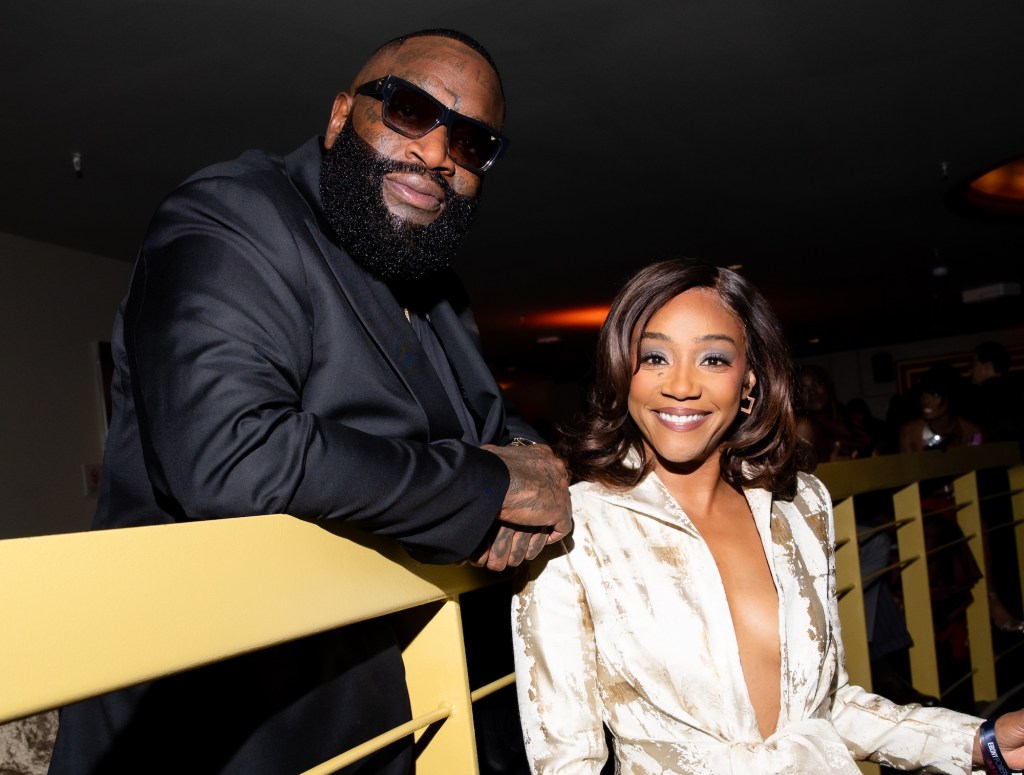
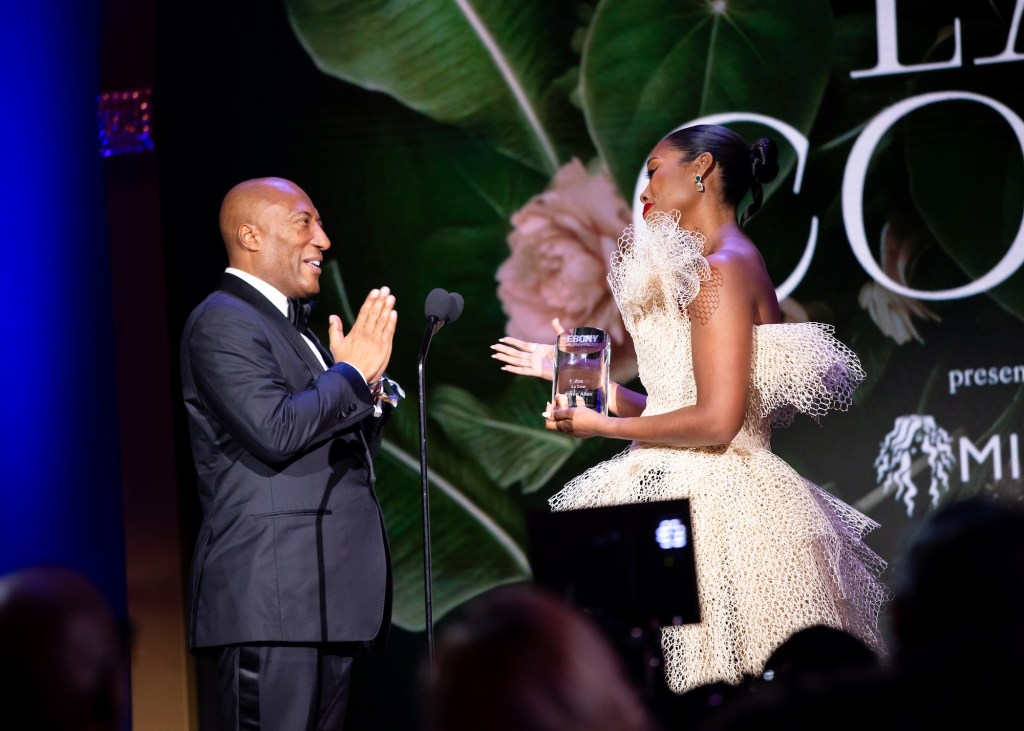
This fall, EBONY unveiled its 2026 Power 100 list, a class that stretches from Jay-Z and Byron Allen to iShowSpeed and a STEM kid creator, all celebrated at a gala at the Hollywood Palladium under the theme “The Stories We Shape.” One of the categories, the Junior Bridgeman Business Vanguard, is named in her father’s honor.
Following the event, Bridgeman shared her thoughts on leadership that serves your team, finding success in the attention economy and defining power that truly makes an impact.
As a teenager, you worked at Wendy’s and Chili’s. What is one specific habit or rule from those shifts that you still use as a CEO?
One thing I learned very early is that the customer experiences the whole business, not your department. If something was wrong with an order, the customer did not care whether the mistake happened at the register, in the kitchen, or somewhere else. They simply knew the experience did not meet their expectations. Working in restaurants teaches you very quickly that everyone has some responsibility for the final outcome. Restaurants also taught me the importance of staying close to the business. You learn things from the front line that you cannot always see in a report.
You were CMO of a restaurant franchise operator, and then took over an 80-year old media brand. What surprised you most about the media business?
Honestly, how many businesses exist inside of the media business. Coming from restaurants, there were certainly complexities, but the economic model was relatively clear. Media has a very different ecosystem. You have the audience consuming the product, advertisers funding parts of the business, platforms influencing distribution, creators and talent shaping relevance, technology affecting discovery, and increasingly commerce and experiences creating additional revenue opportunities. All of those constituencies matter, but they do not always want the same thing.
That requires a different kind of discipline. One of the biggest lessons for me has been that attention and revenue are not the same thing. A piece of content can perform extremely well culturally and still not create meaningful business value unless you have built the right infrastructure around that attention.
What practices from the restaurant world do you think can apply to success in media?
There are actually quite a few. The first is frequency. Restaurants understand that growth is not just about convincing somebody to visit once. The second is consistency. In restaurants, brand standards exist because people expect a certain experience every time they walk through the door. Media brands need that same clarity. And then there is measurement. Restaurant businesses are incredibly disciplined about understanding performance at a granular level. You know what is selling, when it is selling and where there are operational problems. I bring that mindset to EBONY because I believe creativity becomes more powerful when you understand its impact.
Your father bought EBONY and JET at a bankruptcy auction in 2020. When you took over in 2021, what were the first things you fixed or rebuilt?
I tend to be careful with the word “fixed,” because it can suggest that everything before you was wrong. That is not how I view EBONY. We inherited an extraordinary brand with generations of cultural equity, but the business around that brand had to operate in a fundamentally different media environment. So much of my focus has been on rebuilding the infrastructure necessary for EBONY to compete as a modern media company. That means strengthening how we operate, how we sell, how we develop partnerships, how we think about content and distribution, and how we measure whether the work is producing the outcomes we intended.
But there was also a more philosophical question that had to be answered: What does it mean to modernize EBONY without disconnecting it from what made it important in the first place? There are generations of people who have a personal relationship with this brand. Then there is a younger generation whose relationship with media, culture and identity is completely different. My responsibility is not to choose between those audiences. It is to understand the fundamental truth that made EBONY matter historically and translate that truth into products, experiences and storytelling that feel relevant now. Legacy gives you permission to enter the conversation. Relevance determines whether people continue listening.
Are there any leadership lessons or words of encouragement from your father that you think about regularly?
I would describe it less as one particular quote and more as a leadership philosophy I learned from my father: the inverted pyramid.
The idea is that leadership is not about positioning yourself at the top with everyone working up toward you. You turn the pyramid upside down. As a leader, your responsibility is to support the people doing the work and make sure they have what they need to be successful.
That has stayed with me because it changes the way you think about leadership. A title may give you authority, but leadership is really about service, accountability and creating the conditions for other people to succeed.
As CEO, I try to remember that my role is not to have every answer or to be the center of every decision. My responsibility is to provide clarity around where we are going, remove obstacles where I can, make the difficult decisions when necessary, and give the team the support and accountability they need to do their best work.
I think that philosophy takes on another layer at EBONY. There is a responsibility to the people working to move the business forward, but also to the audience and community that have trusted this brand for generations.
The higher you move in an organization, the more people you are responsible for serving, not the more people who are responsible for serving you.
My father led humbly, as a servant leader, and that is the lesson from him I carry most directly into how I try to lead today.
Where do you think are the biggest opportunities for EBONY and other legacy media brands in today’s media landscape?
I think the biggest opportunity is to stop defining a media company primarily by the content it publishes. Content will always be essential, but it can extend into original intellectual property, experiences, commerce, recommendations, partnerships and new forms of distribution. It can create opportunities for brands that want genuine cultural credibility. And it gives us the ability to convene communities both digitally and physically.
I also believe there is significant opportunity in understanding audiences more deeply. Our history is an enormous competitive advantage, but history cannot become an excuse for standing still. Younger consumers are not obligated to love EBONY because their parents or grandparents did. We have to earn their relationship with the brand on their terms.
If we can combine the trust and cultural authority built over generations with the technology, formats, distribution and business models available today, I think the opportunity is much larger than traditional publishing.
The Power 100 honorees range from Jay-Z and Byron Allen to iShowSpeed and a STEM kid creator. How do you define “power”?
I think power has become much more distributed. Traditionally, we tended to associate power with institutions: the person running the company, controlling capital, holding political office or deciding who gained access. Those forms of power still matter enormously. But technology and social platforms have created entirely different ways for people to build influence.
A young person can create something from their bedroom and develop an audience larger than many traditional media outlets. A creator can introduce millions of people to an idea, product or cause almost instantly. An entrepreneur can build a community without first receiving permission from a traditional gatekeeper.
That changes the way we should think about power. For EBONY, I think power is ultimately about the ability to create meaningful impact. Can you shift a conversation? Can you open a door that was previously closed? Can you build something that creates opportunity for other people? Can you influence how people see themselves or what they believe is possible? When I think about power today, I am interested not only in who has it, but what they are doing with it.
Eden Bridgeman began her working life with shifts at Wendy’s and Chili’s—jobs that taught her key lessons on a career path that put her in the driver’s seat of one of the most iconic brands in media history.
Bridgeman went on from working behind the counter to becoming the CMO of Manna, Inc., a restaurant franchise operator. And in 2021, after her father, the late Ulysses “Junior” Bridgeman, bought EBONY and JET at a bankruptcy auction in 2020, she took the reins of EBONY.
This fall, EBONY unveiled its 2026 Power 100 list, a class that stretches from Jay-Z and Byron Allen to iShowSpeed and a STEM kid creator, all celebrated at a gala at the Hollywood Palladium under the theme “The Stories We Shape.” One of the categories, the Junior Bridgeman Business Vanguard, is named in her father’s honor.
Comments are Closed