
Catch the Full Episode:
 Overview
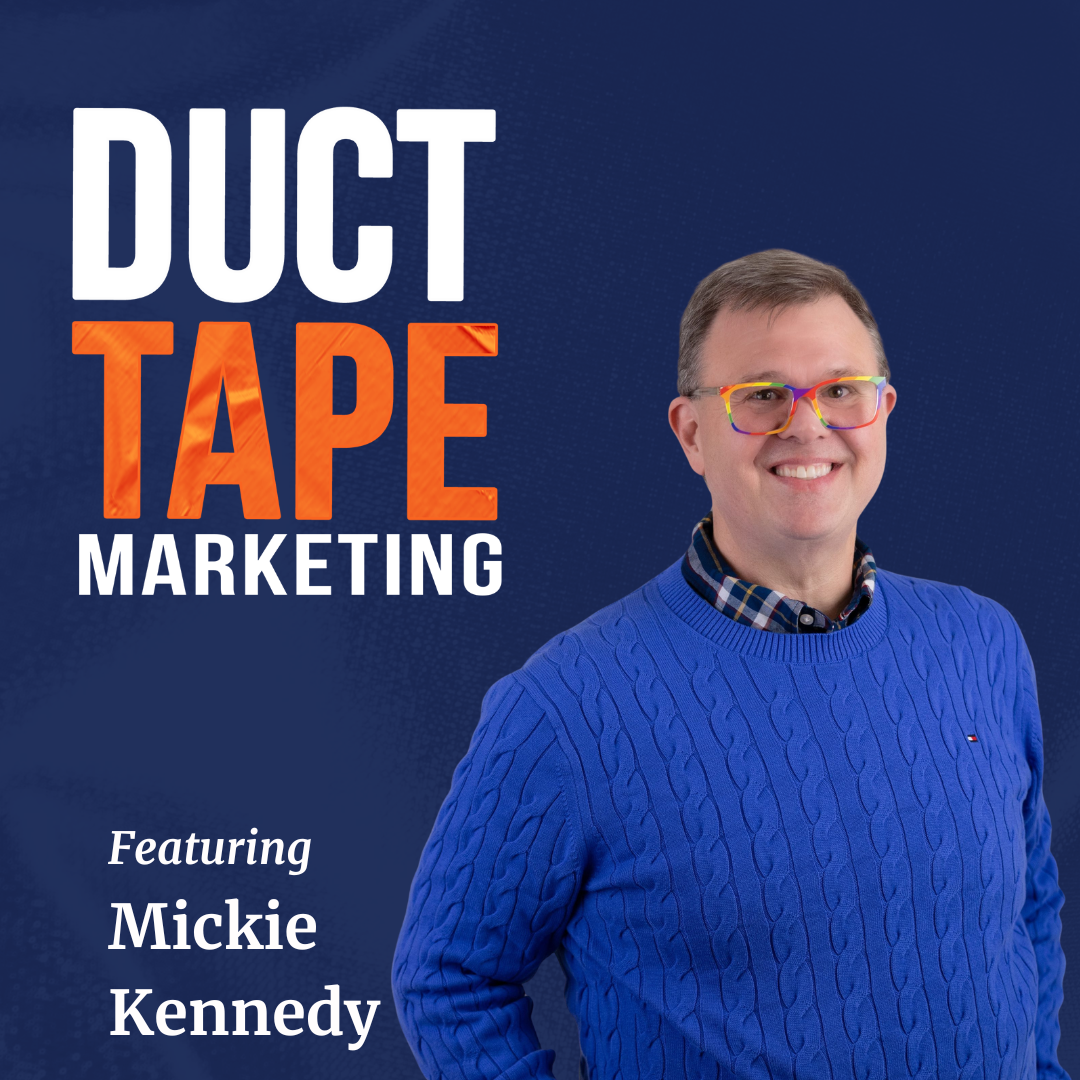
Most small businesses have written off the press release as a relic. They should not have. In this episode, John Jantsch sits down with Mickie Kennedy, founder of eReleases, to make the case that earned media is more valuable now than it has been in decades — and that AI is changing how smart businesses write press releases, but not in the way most people think.
Kennedy draws on over 25 years of press release distribution to explain why 97% of press releases fail to generate a single article, and what the other 3% have in common. The conversation covers story arc, the contrarian angle, using surveys to manufacture news, and why putting the spotlight on a customer often works better than talking about your own product.
The AI component here is practical and specific. Kennedy walks through a paragraph-by-paragraph approach to using AI as a writing tool — not a strategy tool — and explains why letting AI decide what to write about is where most people go wrong. If you are a small business owner who has dismissed PR as too expensive or too complicated, this episode will change that.
About Mickie Kennedy
Mickie Kennedy is the founder of eReleases, a press release distribution service he launched in 1998 after watching small businesses get priced out of PR agencies charging $20,000 minimums. eReleases gives small businesses and entrepreneurs access to the same national newswire infrastructure used by major corporations, at roughly a quarter of the cost. He has worked with more than 32,000 clients and distributes around 10,000 press releases per year. He teaches PR strategy through a free masterclass at ereleases.com/plan.
Key Takeaways
- Syndication links are not earned media. Getting your press release replicated on 200 subdomains means nothing if no journalist wrote an article about you. The only metric that matters is whether a human being covered your story.
- AI is changing the value of earned media. Search engines and AI tools lean on credible industry publications as sources. One article in the right trade publication now carries more weight than it ever did.
- 97% of press releases fail to generate coverage. The ones that do share common patterns: a story arc, stakes, a contrarian angle, or a data-backed finding from an original survey.
- Do not let AI decide what to write about. Use AI to structure and write the press release once you have a strong strategic idea. The idea itself has to come from you.
- Build press releases paragraph by paragraph with AI. Ask for structure first, then headline options, then opening paragraph variations. The whole process takes about 12 minutes and produces far better results than a single prompt.
- Find an enemy or a blind spot. The carpet company that called out big box home improvement stores got picked up in every major flooring trade publication. Nobody had said it before. That is the opportunity.
- Put the spotlight on a customer, not yourself. A story about a company that was losing money for three years and turned profitable using your software is more interesting than a feature list.
- Surveys manufacture news in any industry. Partner with a smaller trade association, run a survey, find the most surprising result, and build the release around that finding.
- The contrarian position is less crowded. Journalists outside of politics want balance. If everyone in your industry agrees on something, being the thoughtful voice of dissent gets you quoted every time the topic comes up.
Timestamps
[00:01] — Opening hook: the press release is not dead, but there is a catch when AI is involved.
[01:30] — How PR and press releases have changed since the web arrived, and why syndication feeds created a false sense of results.
[03:51] — Earned media vs. owned media, and why AI is pushing earned media back to the top of the priority stack.
[06:15] — The waste management client who got one article and landed $30 to $40 million in contracts from Australia.
[08:27] — How to find a newsworthy angle when you are not naturally in a newsworthy business.
[10:13] — The carpet company in New Jersey that called out Home Depot and Lowe’s and got picked up everywhere.
[12:05] — Why blasting a media database is killing your chances with journalists and what to do instead.
[14:47] — How to use AI to write press releases the right way: structure first, headlines second, paragraphs third.
[18:28] — Using AI for deep research and brainstorming contrarian ideas by industry.
[19:09] — Why the contrarian position is strategically underused and how it gets you recurring media mentions.
Memorable Quotes
“When a journalist writes an article about you, it’s an implied endorsement. Someone has transformed the press release into a written article.”
“You have to take what you want, and that’s the pill. Sometimes you’ve got to put it in cheese to get the journalist to swallow it.”
“AI is very good at writing the press release. The ideas behind it — it’s not very good at that. It’ll make a press release like you see out there, and you’re like, this is as good as that one. Well, that one probably didn’t get any pickups either.”
“The contrarian position is a much easier place because fewer people are competing for that spot.”
Learn more at ereleases.com. Mickie’s free PR strategy masterclass is at ereleases.com/plan.
Comments are Closed