
Catch the Full Episode
 Overview
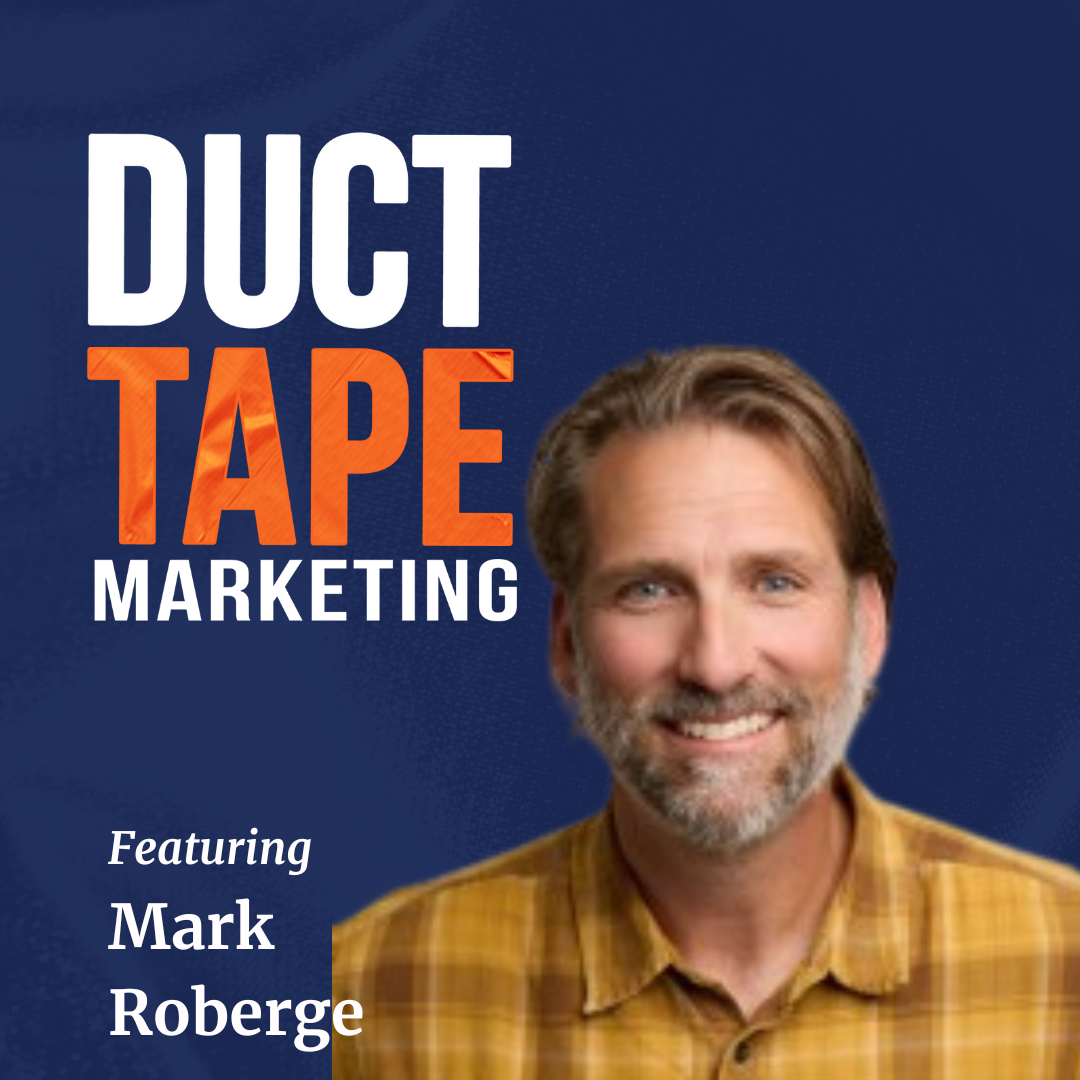
Scaling too fast kills companies. So does scaling too slow. But most business owners never stop to ask whether they have actually earned the right to scale at all. In this episode of the Duct Tape Marketing Podcast, John Jantsch sits down with Mark Roberge, co-founder of Stage 2 Capital, founding CRO of HubSpot, and author of The Science of Scaling, to unpack one of the most misunderstood decisions in business growth.
Mark helped take HubSpot from zero to IPO, then spent years at Harvard Business School teaching founders why so many fast-growing companies implode. His framework asks a different question: instead of “how fast can we grow,” ask “have we proven we deserve to grow?” The answer requires evidence, not instinct, and not pressure from investors.
This episode is for small business owners, agency owners, and entrepreneurs who are thinking about adding headcount, launching new channels, or entering a new stage of growth. If you want to scale without destroying what you built, this conversation is your roadmap.
Guest Bio
Mark Roberge is the co-founder of Stage 2 Capital and the founding Chief Revenue Officer at HubSpot, where he grew the company from zero to IPO. He later joined Harvard Business School as a senior lecturer, teaching founders and operators how to scale with discipline. He is the author of The Sales Acceleration Formula and The Science of Scaling, and has spent the past decade as an investor, board member, and advisor helping companies navigate the gap between early traction and sustainable growth.
Key Takeaways
- Product-market fit is not a revenue number. It is a retention metric. If customers are not staying and using your product, you do not have it yet, regardless of how many you have signed.
- Go-to-market fit is the second gate before scaling. It is measured by unit economics, specifically whether you can acquire and serve customers profitably.
- Scaling revenue too fast is a structural problem, not a motivation problem. Hiring 27 reps when you only have one requires 270 qualified interview screens, management infrastructure, and demand generation that most companies simply do not have.
- Build a monthly hiring pace instead of a January 2nd headcount dump. Steady, intentional growth gives you time to build the systems that support each new hire.
- The CRM funnel should not end at closed-won. Retention, engagement, and expansion are stages, not afterthoughts. The Marketing Hourglass is the right model.
- Leading indicators of retention can be defined simply. Slack tracked whether 80% of customers sent 2,000 team messages per month. You do not need a data science team to build a version of this for your business.
- A feature is not a moat. If a competitor can replicate your advantage in six months, it is not long-term defensibility. Founders need a vision for what makes them unbeatable over time.
- The ability to up-level the executive team around you as the company grows is one of the strongest predictors of a successful exit. It is also one of the hardest skills to develop.
- Sometimes the business outgrows the founder. The COO or president model is not failure. It is graduation. The reframe: someone else does the work you hate so you can focus on the work you love.
- AI is accelerating faster than society can adapt. Mark is donating book proceeds to McLean Hospital for mental health research, because the people building this technology have a responsibility to help manage its consequences.
Great Moments (Timestamps)
[00:02] — The opening question that reframes every growth decision: are you betting on a business that is not prepared to win?
[04:04] — Mark defines what it actually means to earn the right to scale, and why most founders get this wrong from the start
[06:25] — The two-step framework: product-market fit and go-to-market fit explained clearly
[09:51] — Half scale too fast, half too slow. Mark explains the Groupon and WeWork examples as two failure modes
[11:40] — How to measure product-market fit without a data science team, using Slack and HubSpot as real examples
[13:29] — John and Mark align on why retention and advocacy belong inside the customer journey, not outside it
[16:31] — Why a feature is not a moat, and what long-term defensibility actually requires
[17:43] — The London School of Economics study on what predicts a strong startup exit (the answer will surprise most founders)
[20:33] — The mental health connection: Mark shares why he is donating proceeds to McLean Hospital and what the AI era demands of technologists
Memorable Quotes
“The decision on when to scale is usually when someone hands you a fat check, which doesn’t sound that strategic.” — Mark Roberge
“Do not let the dashboards and sales funnels in your CRM end at closed-won. That is literally step four of seven.” — Mark Roberge
“A feature is not long-term defensibility. If your competitor can build it in six months, you don’t have a moat.” — Mark Roberge
“We’re basically offering to pay for someone to do all the work you hate so you can do the work you love.” — Mark Roberge on helping founders let go
“We as technicians need to diversify our efforts away from just building and profiting toward helping society adapt to this new world.” — Mark Roberge
Comments are Closed